Royal Aeronautical Society Podcast
The Royal Aeronautical Society is the world’s only professional body dedicated to the entire aerospace community. Established in 1866 to further the art, science and engineering of aeronautics, the Society has been at the forefront of developments in aerospace ever since.






Episodes
Dec 1, 2021
Dec 1, 2021
45 min
In the heat of World War II, John Charnley was sent from his red-brick university to the heart of aero research in the UK, the Royal Aircraft Establishment in Farnborough. In this archive recording, Sir John describes the transition into the RAE Aerodynamics Department’s Flight Test Division and his work on many of the problems associated with high-speed flight, starting with work on the Gloster E.28/39 which tested Whittle’s jet engine.
After twelve years Sir John moved from the very fast to the very slow, when he was sent to head the RAE Blind Landing Experimental Unit. Charnley explains how he helped to move the Unit’s purely military work landing V-bombers in poor conditions, to include civil applications leading to the development of the AUTOLAND system. A fuller account of the work of the Blind Landing project can be found in Sir John’s Journal of Aeronautical History paper at https://www.aerosociety.com/JAHblindlanding.
Sir John Charnley was interviewed as part of the DERA Oral History Project in 2000 and the recording was edited by Eur Ing Mike Stanberry FRAeS.
Nov 19, 2021
Nov 19, 2021
1 hr 11 min
The ‘Warsaw Warrior’, George Tompkins Jnr, has probably defended more cases involving the Warsaw Convention than anyone else. In this fascinating lecture, Tompkins takes us into the courtrooms and corridors of power where he helped to shift the USA’s stance on the limitation of liabilities that passengers faced when litigating against airlines in the USA. He then takes us to the Montreal Treaty negotiations where, as legal aid to IATA at the conference, the rules were re-written, before making some observations on the post-Montreal world.
The recording includes a question-and-answer session and a vote of thanks by Harold Caplan FRAeS.
George Tompkins Jnr gave the RAeS Air Law Group’s 10th Beaumont Memorial Lecture on 16 June 2011. The session was introduced by Robert and the recording was edited by Eur Ing Mike Stanberry FRAeS.
Nov 9, 2021
Nov 9, 2021
41 min
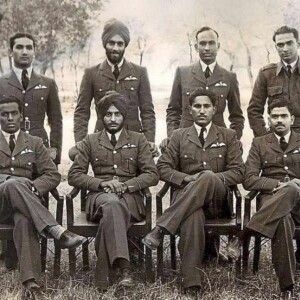
To celebrate and acknowledge the contribution of Black British Aviators to UK aerospace, the RAeS podcast speaks to filmmaker, writer, actor, and social commentator; Andrew Rajan. We will look at some of the little-known stories of achievement by people of colour within Britain's military forces and how they may inspire the black and brown people of today's UK.
Oct 1, 2021
Oct 1, 2021
59 min
BAE Hawk Chief Engineer, Andrew Bradley, explains how the aircraft developed from the turn of the millennium. He looks at the demands of foreign customers, such as those in India, South Africa and Australia, and explores the Hawk T.Mk.2 programme, which was brought into service with the RAF during 2008. He concludes by predicting how the Hawk story would continue into the 2010s.
The paper finishes with a question-and-answer session, in which Andrew Bradley is joined by Harry Fraser-Mitchell FRAeS and Chris Roberts. Topics explored include the story behind the development of the SMURF and the secret of the aircraft’s long-term success.
Andrew Bradley gave the last paper in an evening dedicated to the Hawk Aircraft : A British Success Story. The evening was organised by the Royal Aeronautical Society’s Historical Group on 20 October 2011. The session was introduced by Dr Kit Mitchell FRAeS and the recording was edited by Eur Ing Mike Stanberry FRAeS.
Oct 1, 2021
Oct 1, 2021
24 min
BAE Hawk test pilot, Chris Roberts, takes us through the challenges faced by the flight test team that put the Hawk T1 to T45 through their paces. He starts off by explaining the main problems with the T1, before describing the demands of foreign buyers, including the Finnish Air Force and, most importantly, the challenges of producing the T45 Goshawk for the US Navy.
Chris Roberts gave the second paper in an evening dedicated to the Hawk Aircraft : A British Success Story. The evening was organised by the Royal Aeronautical Society’s Historical Group on 20 October 2011. The session was introduced by Dr Kit Mitchell FRAeS and the recording was edited by Eur Ing Mike Stanberry FRAeS.
Oct 1, 2021
Oct 1, 2021
31 min
BAE Hawks’ first Chief Aerodynamicist explores the creation of the last all-British military aircraft. He takes us from the first concept, to fulfil the RAF’s demand for a new trainer, through the major design decisions and challenges facing the project’s development, and shows how the team brought the project in on time, on cost and on spec.
The full story of the Hawk can be found in Harry Fraser-Mitchell’s paper in the Journal of Aeronautical History, which can be accessed via https://www.aerosociety.com/media/4842/the-hawk-story.pdf
Harry Fraser-Mitchell gave the first paper in an evening dedicated to the Hawk Aircraft : A British Success Story. The evening was organised by the Royal Aeronautical Society’s Historical Group on 20 October 2011. The session was introduced by Dr Kit Mitchell FRAeS and the recording was edited by Eur Ing Mike Stanberry FRAeS.
Sep 14, 2021
Sep 14, 2021
1 hr 1 min
Brooklands was the experimental flying grounds used by many of our early aero pioneers, including the firm that would later dominate its aviation history, Vickers. Dr Gardner, who spent over forty years with Vickers and BAC, takes us through the story of Brooklands. After starting with its archaeology and pre-motoring history, Gardner moves on to explore how the aviation pioneers used a car racing circuit to solve some of the mysteries of heavier than air flight and reminisces about the days of the Brooklands flying club, before looking at the achievements made during the Vickers era.
Dr H. H. Gardner FRAeS gave his lecture to a meeting organised by the Royal Aeronautical Society’s Historical Group on 18 November 1969. The lecture is introduced by J. L. Nayler FRAeS FAIAA, the recording was digitised thanks to a grant from the RAeS Foundation and the podcast was edited by Eur Ing Mike Stanberry FRAeS.
Aug 24, 2021
Aug 24, 2021
1 hr 6 sec
The last of the aircraft photography pioneers takes us step-by-step through a typical air-to-air photographic flight during the 1960s. He also describes the different aircraft he used before and after the Second World War and the extra challenges faced by those who take photographs from aircraft carriers and parachutes.
Please note, due to the age of this recording, there are periods of poor sound quality throughout.
Cyril Peckham gave his lecture, History of Air Photography, to a meeting organised by the Royal Aeronautical Society’s Historical Group on 29 January 1968. The lecture is introduced by J. L. Nayler FRAeS FAIAA, the recording was digitised thanks to a grant from the RAeS Foundation and the podcast was edited by Eur Ing Mike Stanberry FRAeS.
Jul 12, 2021
Jul 12, 2021
51 min
On 8 July 2006 a team from the University of Toronto flew a full-sized, piloted, flapping-wing aircraft. In this entertaining lecture the project’s leader, Prof James DeLaurier, shows us the inspiration behind the project and guides us through the research, design, testing, construction and certification stages, before taking us through the events of an early morning in 2006 when a pilot flew the Ornithopter No.1, nick named “The Big Flapper”, for fourteen seconds over Bombardier’s Airfield in Toronto.
Prof James DeLaurier MRAeS presented his lecture. Ornithopter Research, to a meeting of the Royal Aeronautical Society on 12 September 2007. The lecture was introduced by AVM David Couzens FRAeS and the film & podcast was edited by Eur Ing Mike Stanberry FRAeS.
Jul 5, 2021
Jul 5, 2021
1 hr 8 min
Stable columns may have been used by the ancient Greeks, but studies into stability and buckling did not begin until the eighteenth century. In this lecture, Prof Hoff looks at how our knowledge of these phenomena during flight was developed by the Wright Brothers and Theodore von Kármán, before exploring how he and others moved our knowledge forward in the early post-war years.
Prof Hoff’s written paper that accompanied this lecture can be read via the Aeronautical Journal Archive. RAeS members can access the entire Aeronautical Journal Archive for free via the RAeS website.
Prof Nicholas J. Hoff FRAeS gave the Royal Aeronautical Society’s 41st Wilbur Wright Memorial Lecture on 14 September 1953. The lecture was introduced by the then President, Sir William Farren HonFRAeS and was followed by a vote of thanks from Sir George Edwards HonFRAeS. The recording was digitised thanks to a grant from the RAeS Foundation and the podcast was edited by Eur Ing Mike Stanberry FRAeS.